







In the recent times, your healthcare website is way more than just a digital brochure—it’s your clinic’s first impression, and we all know first impressions matter. If your site is making the wrong moves, you could be losing patient trust without even realizing it. Hence, getting your website right is crucial.
MfunL, a healthcare digital marketing agency in Kolkata, helps you avoid these common mistakes, making sure your site builds trust and converts visitors into patients.
So, if you are a healthcare brand, these are the common website-related mistakes that you can steer clear of.
Why Patient Trust Starts with Your Website
Think of your website as your digital waiting room. Patients get their first taste of your clinic here. A clunky, outdated website? It’s like having a rude receptionist who doesn’t care about your time. You need your site to be welcoming, easy to use, and clear right from the start.
Mistake #1 – Making the Website About the Brand, Not the Patient
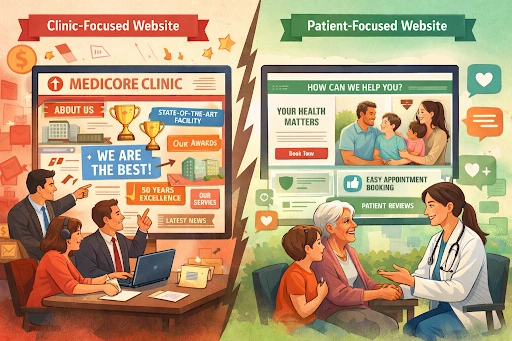
Your patients don’t care about how great you think your clinic is. They care about them—their needs, their concerns. Too much “we” and not enough “you”? Big mistake!
Missing Patient Pain Points
When a website only lists services without addressing specific patient concerns, it feels disconnected. Patients want to know that their individual struggles are understood, not just that services exist.
Why Empathy Converts Better Than Expertise Alone
Expertise shows that you know your stuff, but empathy makes patients feel seen and heard. When they sense genuine care, trust is built, and they’re more likely to take the next step with you.
Mistake #2 – Confusing, Cluttered, or Outdated Design
If your website is a confusing mess, patients won’t stick around. Simple, clear, modern design says “we know what we’re doing.”
Overloaded Pages That Overwhelm Patients
Cluttered pages with too much information confuse and frustrate patients. When they can’t find what they need quickly, they feel lost and unsure about your services.
Old Layouts That Signal Neglect
An outdated website layout gives the impression that your clinic isn’t keeping up with modern standards. Patients may wonder if your practice is stuck in the past, affecting their trust.
Why Simple Design Feels More Trustworthy in Healthcare
Complex, busy designs can make patients feel uneasy. They may question whether the clinic values their time, as they struggle to navigate through unnecessary details.
MfunL is a healthcare digital marketing agency in Kolkata that specialises in optimising websites to build trust, increase patient engagement, and drive conversions with personalised strategies.
Mistake #3 – No Clear Doctor Credentials or Clinic Credibility
Patients want to know they’re in safe hands. If your site doesn’t showcase your qualifications or experience, you might lose their trust.
Missing Qualifications, Experience, or Affiliations
When patients can’t easily find your doctors’ credentials or affiliations, they start to question if your clinic is credible. Lack of transparency on qualifications can raise red flags.
Stock Photos vs Real Doctors and Real Spaces
Using stock photos instead of real images of your doctors and clinic can make your website feel inauthentic. Patients may feel disconnected and hesitant to trust a clinic that hides behind generic images.
Why Transparency Builds Instant Confidence
If your website doesn’t showcase who you are and what you do clearly, patients may feel uncertain about your trustworthiness. Hiding details only fuels doubt and confusion.
Mistake #4 – Poor Mobile Experience (Where Patients Actually Browse)
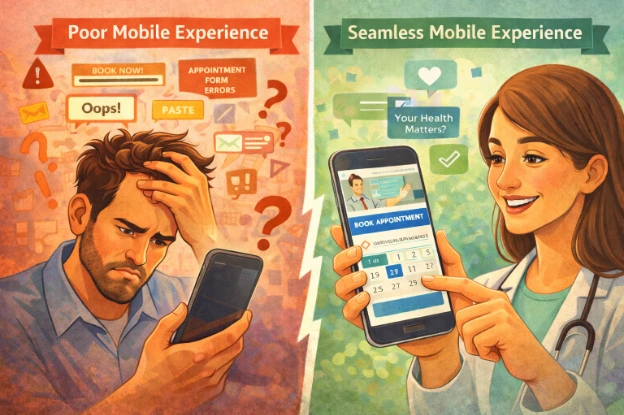
Most patients are browsing on their phones. If your website isn’t mobile-friendly, you’re missing out on bookings.
Tiny Text, Broken Layouts, Slow Loading
If your mobile site is slow, hard to read, or poorly laid out, patients will get frustrated. A slow, clunky website creates a negative experience, making them less likely to engage.
Mobile Usability and Appointment Intent
When patients can’t easily navigate your site or book appointments on their phones, they quickly lose interest. A poor mobile experience can silently cost you valuable bookings.
How Mobile Friction Kills Bookings Silently
Unresponsive text boxes, awkward navigation, or slow load times can drive patients away without them saying a word. These small issues quietly prevent them from completing their booking.
Mistake #5 – Weak or Confusing Calls-to-Action
A weak CTA like “Contact Us” isn’t enough. Make it crystal clear what the next step is.
“Contact Us” Is Not a Healthcare CTA
A vague CTA like “Contact Us” leaves patients unsure of what to do next. It doesn’t guide them to take action, causing confusion and hesitation.
What Patients Actually Want to Do Next
When patients visit your site, they want clear directions on what to do next. If your CTA isn’t specific, they may get frustrated and leave without taking action.
Why Reassurance Beats Urgency in CTAs
Reassurance works better than pressure. Patients are looking for confidence—let them know they’re making the right choice.
Contact MfunL, a healthcare digital marketing agency in Kolkata, who can help you craft patient-focused strategies that drive results.
Mistake #6 – No Social Proof or Real Patient Signals
Social proof, like patient reviews, is vital. If your website doesn’t feature real testimonials, you’re missing a huge opportunity.
Missing Testimonials and Reviews
Without patient testimonials or reviews, your website feels impersonal. Patients trust the experiences of others, and without these, they may question your credibility.
Why Anonymous Trust Signals Don’t Work
Anonymous reviews or vague feedback lack authenticity and don’t create a real connection. Patients want to hear from real people with real experiences, not generic statements.
Ethical Ways to Show Credibility Without Exaggeration
Over-the-top claims or exaggerated reviews can backfire. If your testimonials feel too polished or fake, patients will sense it, and trust will be lost.
Mistake #7 – Medical Jargon Without Explanation
Using too much medical jargon increases patient anxiety. Keep it simple, and make sure patients understand their treatment options.
Writing for Patients, Not Peers
Using complex medical jargon or writing in a way that only other professionals understand alienates patients. If they can’t comprehend the language, they may feel confused or even intimidated.
Clarity as a Trust-Building Tool
Overloading patients with technical terms increases their anxiety and distrust. If your content is unclear or hard to understand, patients may hesitate to take the next step in their care.
Mistake #8 – Broken Basics That Scream “Carelessness”
Outdated contact details or broken links give the impression that you’re not paying attention. Small mistakes make patients question your professionalism.
Outdated Phone Numbers and Addresses
When phone numbers and addresses are outdated, patients can’t reach you when they need to. This creates frustration and can make your clinic seem unreliable or unprofessional.
Non-Functional Forms and Links
Broken forms or links make it impossible for patients to take action, like booking an appointment. If they encounter errors, they’ll leave your site and probably won’t return.
Trust Isn’t Claimed, It’s Demonstrated
Fixing small issues on your website, like broken links or unclear CTAs, can make a big difference in how patients perceive your clinic.
If your website is missing the trust factor, it’s time for a change. Let MfunL, a healthcare digital marketing agency in Kolkata, help you redesign your website with patient trust in mind.
Book your consultation with an expert at MfunL today.
People Also Ask
1. What makes a healthcare website trustworthy?
A trustworthy healthcare website is easy to navigate, transparent, and provides clear information. Patients should easily find details about services, doctor qualifications, and how to contact the clinic.
2. Why do patients leave clinic websites without booking an appointment?
Patients leave websites when they can’t find what they need quickly, or the site is too complicated. A slow, cluttered site or unclear calls-to-action can also cause frustration.
3. How important is website design for healthcare brands?
Website design is crucial for healthcare providers as it directly impacts trust and credibility. A clean, user-friendly design reassures patients that the clinic is professional and reliable.
4. What information do patients look for first on healthcare websites?
Patients typically look for information on services, doctor credentials, and how to book an appointment. Accessibility, clarity, and ease of navigation are key.
5. How can a healthcare website increase patient trust?
By providing clear, honest information, displaying doctor qualifications, and including patient testimonials, a website can build trust. It’s also important to have a professional design and functional user experience.