Healthcare SEO/AEO/GEO
Strengthen your clinic’s online presence with strategic healthcare SEO that drives real patient growth.
Home > What We Do > Patient Lead Generation > Healthcare SEO
Ranking #1 Is No Longer the Same as Being Found
MfunL builds visibility across all three layers at once: classic search rankings, direct answers, and AI citations.
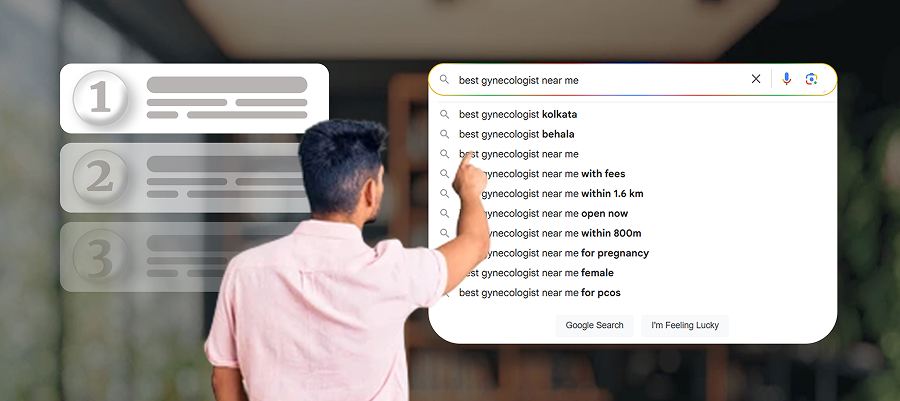
Your website can hold the top organic position and still lose the patient. Here's what changed. When someone searches a symptom, a procedure or a specialist near them, most healthcare queries now return an AI-generated summary before a single blue link appears. The patient reads the answer. They act on it. They never scroll. And a growing share of patients skip the search box entirely — asking ChatGPT, Gemini, Perplexity or an on-device assistant which hospital to go to, whether their symptom is serious, or what a procedure costs. If your practice isn't inside those answers, you are not in the running. Not ranked lower — absent.
Three Disciplines, One Outcome — More Patients
It’s how patients find you before they find someone else
Healthcare SEO improves where your website ranks in search results. Healthcare AEO (Answer Engine Optimization) structures your content so search engines and voice assistants can lift a direct, complete answer from your page. Healthcare GEO (Generative Engine Optimization) builds the authority, structure and entity signals that make AI assistants like ChatGPT, Gemini, Perplexity and Google AI Overviews cite and recommend your practice by name. They aren't replacements for each other. SEO is the foundation, AEO is the format, GEO is the reputation.
| SEO | AEO | GEO | |
|---|---|---|---|
| Goal | Rank in search results | Win the answer box | Get cited by name in AI answers |
| Surface | Google, Bing organic + Maps | Featured Snippets, People Also Ask, Voice Search | ChatGPT, Gemini, Perplexity, Copilot, AI Overviews |
| Unit of Work | The page | The passage | The entity |
| Content Style | Keyword-led, in-depth | Question-led, direct, self-contained | Fact-dense, sourced, structured |
| Key Levers | Technical health, content depth, links, Google Business Profile | Question research, answer-first formatting, FAQ & HowTo schema | Structured data, citations, third-party mentions, reviews, consistent entity data |
| Measured By | Rankings, organic sessions, calls | Snippet ownership, zero-click visibility | Share of AI answers, citation frequency, AI-referred sessions |
| Realistic Timeline | 3–6 months | 4–10 weeks | 2–5 months for first citations |
Why you can't skip any of them AI systems still crawl the open web to build their answers — so weak SEO means weak GEO. But the sources AI engines cite increasingly diverge from the sites that rank highest organically. Ranking well is now necessary but no longer sufficient.
Health Content Is Held to a Higher Standard Than Any Other Category
It is the strategy that puts your healthcare practice on the digital map.
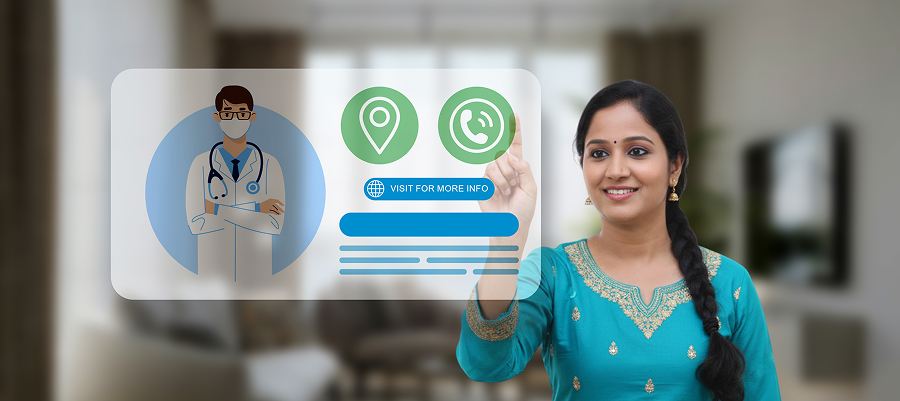
Search engines and AI platforms treat health as a "your money or your life" topic. That means the bar for what gets shown, quoted and recommended is deliberately higher — and it moves.
In practice, four things decide whether a healthcare site clears that bar:
1. Verifiable expertise. Content attributed to a named, credentialled clinician outperforms anonymous content. Every treatment page should carry an author or medical reviewer with qualifications, registration number and a linked profile.
2. Accountability and transparency. Clear ownership, physical address, registration details, real contact routes, visible policies. Anonymous health content is structurally disadvantaged.
3. Accuracy and currency. Health guidance changes. Pages with genuine, dated updates are favoured over pages that haven't moved in two years.
4. Compliance.Indian medical practitioners operate under professional conduct and advertising codes that restrict how care can be promoted and what claims can be made. Generalist agencies routinely write copy that puts a doctor's registration at risk. We don't.

A Complete Visibility Stack for Hospitals, Clinics and Practitioners
Foundation: Healthcare SEO
Technical audit and site health — Core Web Vitals, crawlability, indexation, mobile experience and site architecture.
Patient-intent keyword research mapped to specialty, procedure, symptom and location.
Treatment and procedure page builds optimised for both ranking and AI extraction.
Medical blog strategy answering real patient questions.
Google Business Profile optimisation for every location and every practitioner.
"Near me" and local pack strategy including multi-location and multi-branch setups.
Healthcare directory and citation consistency across Practo, Justdial, Lybrate, Google, Apple Maps and more.
Ethical, relevant link acquisition from medical associations, health publications, academic resources and press coverage.
Layer Two: Answer Engine Optimization (AEO)
Question mining from real patient language, People Also Ask, voice queries and clinic front-desk conversations.
Answer-first content restructuring with direct answers in the first 40–60 words.
Structured data implementation including FAQPage, MedicalWebPage, Physician, MedicalClinic, Hospital, Service and Breadcrumb schema.
Featured Snippet and People Also Ask optimisation for priority procedures.
Voice-search formatting for conversational search queries.
Symptom → Condition → Treatment → Specialist content clusters that mirror the real patient journey.
Layer Three: Generative Engine Optimization (GEO)
AI visibility audit across ChatGPT, Gemini, Perplexity, Copilot and Google AI Overviews.
Entity building using consistent machine-readable information about doctors, hospitals, specialties and locations.
Citation-worthy content including original data, expert commentary and sourceable facts.
Extractable content structure using definition blocks, comparison tables, FAQs and concise answer sections.
AI crawler accessibility review covering robots.txt, CDN configuration and GPTBot, ClaudeBot, Google-Extended and PerplexityBot access.
Third-party authority through reviews, health directories, associations, forums and press mentions.
AI reputation monitoring and correction of inaccurate AI-generated information.
Scheduled content refresh cycles to keep important pages inside the AI citation pool.
Reporting
Monthly dashboard covering rankings, organic sessions, calls, form submissions and appointments.
Share-of-answer tracking across leading AI platforms.
AI-referred traffic segmentation inside GA4.
Quarterly strategy reviews with your marketing team or management.
Want to know where you currently stand in AI answers? Get a Free AI Visibility Audit or Call +91 8336920676
A 90-Day Path From Invisible to Cited
Weeks 1–2 — Diagnosis
Technical audit covering site health, crawlability, Core Web Vitals and indexation.
Competitor mapping and patient-intent keyword research across specialties, treatments and locations.
AI visibility baseline across ChatGPT, Gemini, Perplexity, Copilot and Google AI Overviews.
Receive a detailed report showing where you appear, where competitors dominate and the opportunities nobody has claimed yet.
Weeks 3–6 — Foundation
Technical SEO improvements and website architecture optimisation.
Structured data implementation for healthcare entities, services and FAQs.
Google Business Profile optimisation and healthcare directory consistency.
Verification that search crawlers and AI bots can fully access and understand your content.
Weeks 5–12 — Content Build
Creation and optimisation of priority treatment, procedure and specialty pages.
Question-led content answering real patient concerns.
Content written or reviewed by qualified medical writers.
Answer-first formatting with clinician attribution to improve trust and AI extractability.
Month 3 Onward — Authority & Compounding
Continuous publishing of high-value healthcare content.
Link building, media mentions and review generation.
Ongoing entity reinforcement across your digital presence.
Monthly performance measurement across SEO, AEO and GEO.
Ongoing — Iterate
AI-generated answers evolve every week.
We re-run your priority prompts every month across leading AI platforms.
Based on the results, we refine content, strengthen authority signals and improve your visibility continuously.
Built for Every Kind of Healthcare Practice
Our strategies are tailored for every type of healthcare organisation, from individual practitioners to multi-location hospital groups.
We Work With
Hospitals — General hospitals, multispecialty hospitals, superspecialty hospitals, daycare centres, eye hospitals, cancer hospitals and nursing homes
Clinics — Dental clinics, aesthetic & wellness clinics, ayurvedic clinics, fertility & IVF centres, hearing aid centres and multispecialty clinics
Individual Practitioners — Surgeons across every specialty, dermatologists, gynecologists, Diagnostic Centres & Laboratories.
Across India
Headquartered in Kolkata, we work with healthcare brands across Hyderabad, Bhubaneswar, Ahmedabad Noida, Guwahati and many other cities throughout India.
What We Offer
The proven strategies to boost visibility and bring in more patients.
Our healthcare SEO services cover everything you need to get found:
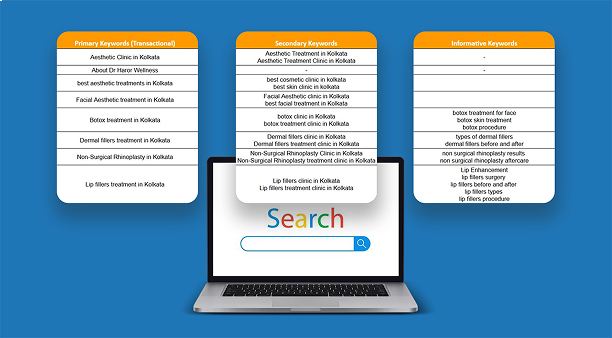
Keyword research and content planning
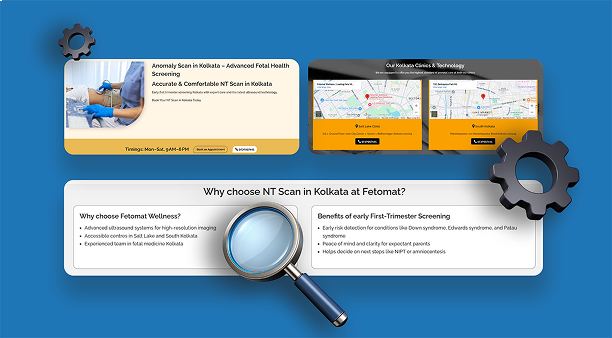
SEO-optimised treatment pages and blogs
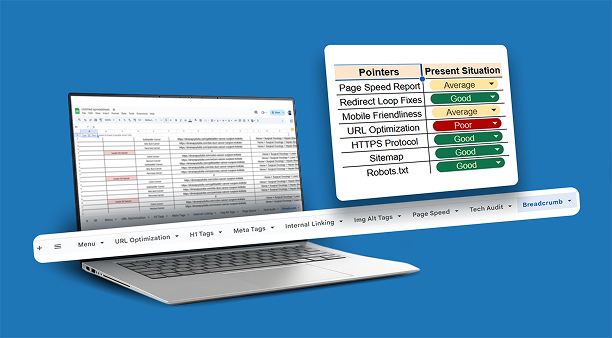
Technical audits and hospital website optimisation
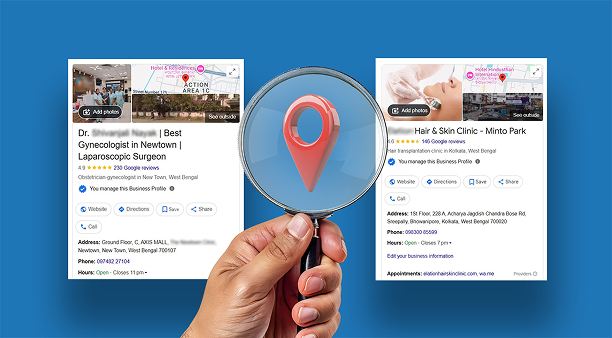
Local SEO for doctors and clinics
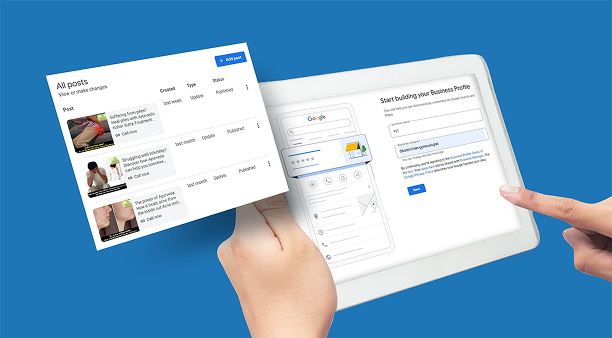
Google My Business setup and posts
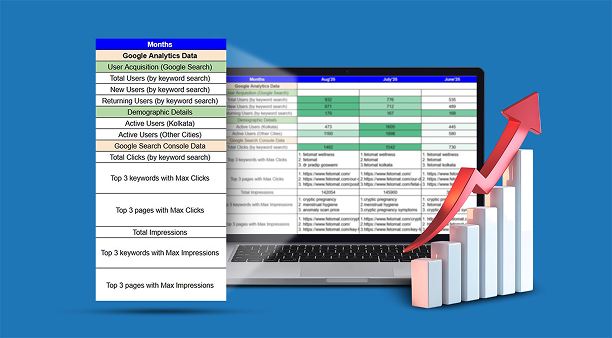
Monthly SEO performance reports
Ready to rank higher and attract more patients? Let MfunL handle your SEO strategy -
Call 8336920676
How MfunL Makes SEO Work for You?
We don’t just bring traffic; we get you real appointments.
At MfunL, we specialise in healthcare SEO strategies that improve your online presence and connect you with patients. Here's how we do it:
SEO-Optimised Treatment Pages that enhance service visibility and boost patient trust.
Health Blogs optimised for search to answer real patient queries and rank higher.
SEO-Driven Social Media Content that builds local authority and attracts organic traffic.
Content Calendars are aligned with seasonal healthcare trends to create timely, SEO-rich posts.
GMB Posts, Ad Copy, and Video Scripts are optimised to improve local rankings and drive patient appointments.
Let MfunL turn your expertise into content that educates, connects, and converts.

Questions Hospital and Clinic Owners Ask Us
What is healthcare SEO?
What is AEO in healthcare marketing?
What is GEO in healthcare marketing?
What's the difference between SEO, AEO and GEO?
Does SEO still matter if AI is answering everything?
How do I know if my hospital appears in AI answers?
Why is my traffic falling even though my rankings haven't dropped?
How long does healthcare SEO take to show results?
Can a single doctor or small clinic compete with large hospital chains?
Do we still need a blog?
What do you actually report on?
Ranking #1 Is No Longer the Same as Being Found
MfunL builds visibility across all three layers at once: classic search rankings, direct answers, and AI citations.
Your website can hold the top organic position and still lose the patient. Here's what changed. When someone searches a symptom, a procedure or a specialist near them, most healthcare queries now return an AI-generated summary before a single blue link appears. The patient reads the answer. They act on it. They never scroll. And a growing share of patients skip the search box entirely — asking ChatGPT, Gemini, Perplexity or an on-device assistant which hospital to go to, whether their symptom is serious, or what a procedure costs. If your practice isn't inside those answers, you are not in the running. Not ranked lower — absent.
Three Disciplines, One Outcome — More Patients
Healthcare SEO improves where your website ranks in search results. Healthcare AEO (Answer Engine Optimization) structures your content so search engines and voice assistants can lift a direct, complete answer from your page. Healthcare GEO (Generative Engine Optimization) builds the authority, structure and entity signals that make AI assistants like ChatGPT, Gemini, Perplexity and Google AI Overviews cite and recommend your practice by name. They aren't replacements for each other. SEO is the foundation, AEO is the format, GEO is the reputation.
| SEO | AEO | GEO | |
|---|---|---|---|
| Goal | Rank in search results | Win the answer box | Get cited by name in AI answers |
| Surface | Google, Bing organic + Maps | Featured Snippets, People Also Ask, Voice Search | ChatGPT, Gemini, Perplexity, Copilot, AI Overviews |
| Unit of Work | The page | The passage | The entity |
| Content Style | Keyword-led, in-depth | Question-led, direct, self-contained | Fact-dense, sourced, structured |
| Key Levers | Technical health, content depth, links, Google Business Profile | Question research, answer-first formatting, FAQ & HowTo schema | Structured data, citations, third-party mentions, reviews, consistent entity data |
| Measured By | Rankings, organic sessions, calls | Snippet ownership, zero-click visibility | Share of AI answers, citation frequency, AI-referred sessions |
| Realistic Timeline | 3–6 months | 4–10 weeks | 2–5 months for first citations |
Why you can't skip any of them AI systems still crawl the open web to build their answers — so weak SEO means weak GEO. But the sources AI engines cite increasingly diverge from the sites that rank highest organically. Ranking well is now necessary but no longer sufficient.
A Complete Visibility Stack for Hospitals, Clinics and Practitioners
Foundation: Healthcare SEO
Technical audit and site health — Core Web Vitals, crawlability, indexation, mobile experience and site architecture.
Patient-intent keyword research mapped to specialty, procedure, symptom and location.
Treatment and procedure page builds optimised for both ranking and AI extraction.
Medical blog strategy answering real patient questions.
Google Business Profile optimisation for every location and every practitioner.
"Near me" and local pack strategy including multi-location and multi-branch setups.
Healthcare directory and citation consistency across Practo, Justdial, Lybrate, Google, Apple Maps and more.
Ethical, relevant link acquisition from medical associations, health publications, academic resources and press coverage.
Layer Two: Answer Engine Optimization (AEO)
Question mining from real patient language, People Also Ask, voice queries and clinic front-desk conversations.
Answer-first content restructuring with direct answers in the first 40–60 words.
Structured data implementation including FAQPage, MedicalWebPage, Physician, MedicalClinic, Hospital, Service and Breadcrumb schema.
Featured Snippet and People Also Ask optimisation for priority procedures.
Voice-search formatting for conversational search queries.
Symptom → Condition → Treatment → Specialist content clusters that mirror the real patient journey.
Layer Three: Generative Engine Optimization (GEO)
AI visibility audit across ChatGPT, Gemini, Perplexity, Copilot and Google AI Overviews.
Entity building using consistent machine-readable information about doctors, hospitals, specialties and locations.
Citation-worthy content including original data, expert commentary and sourceable facts.
Extractable content structure using definition blocks, comparison tables, FAQs and concise answer sections.
AI crawler accessibility review covering robots.txt, CDN configuration and GPTBot, ClaudeBot, Google-Extended and PerplexityBot access.
Third-party authority through reviews, health directories, associations, forums and press mentions.
AI reputation monitoring and correction of inaccurate AI-generated information.
Scheduled content refresh cycles to keep important pages inside the AI citation pool.
Reporting
Monthly dashboard covering rankings, organic sessions, calls, form submissions and appointments.
Share-of-answer tracking across leading AI platforms.
AI-referred traffic segmentation inside GA4.
Quarterly strategy reviews with your marketing team or management.
Want to know where you currently stand in AI answers?
Get a Free AI Visibility Audit
or
Call +91 8336920676
A 90-Day Path From Invisible to Cited
Weeks 1–2 — Diagnosis
Technical audit covering site health, crawlability, Core Web Vitals and indexation.
Competitor mapping and patient-intent keyword research across specialties, treatments and locations.
AI visibility baseline across ChatGPT, Gemini, Perplexity, Copilot and Google AI Overviews.
Receive a detailed report showing where you appear, where competitors dominate and the opportunities nobody has claimed yet.
Weeks 3–6 — Foundation
Technical SEO improvements and website architecture optimisation.
Structured data implementation for healthcare entities, services and FAQs.
Google Business Profile optimisation and healthcare directory consistency.
Verification that search crawlers and AI bots can fully access and understand your content.
Weeks 5–12 — Content Build
Creation and optimisation of priority treatment, procedure and specialty pages.
Question-led content answering real patient concerns.
Content written or reviewed by qualified medical writers.
Answer-first formatting with clinician attribution to improve trust and AI extractability.
Month 3 Onward — Authority & Compounding
Continuous publishing of high-value healthcare content.
Link building, media mentions and review generation.
Ongoing entity reinforcement across your digital presence.
Monthly performance measurement across SEO, AEO and GEO.
Ongoing — Iterate
AI-generated answers evolve every week.
We re-run your priority prompts every month across leading AI platforms.
Based on the results, we refine content, strengthen authority signals and improve your visibility continuously.
Built for Every Kind of Healthcare Practice
Our strategies are tailored for every type of healthcare organisation, from individual practitioners to multi-location hospital groups.
We Work With
Hospitals — General hospitals, multispecialty hospitals, superspecialty hospitals, daycare centres, eye hospitals, cancer hospitals and nursing homes
Clinics — Dental clinics, aesthetic & wellness clinics, ayurvedic clinics, fertility & IVF centres, hearing aid centres and multispecialty clinics
Individual Practitioners — Surgeons across every specialty, dermatologists, gynecologists, Diagnostic Centres & Laboratories.
Across India
Headquartered in Kolkata, we work with healthcare brands across Hyderabad, Bhubaneswar, Ahmedabad Noida, Guwahati and many other cities throughout India.
Health Content Is Held to a Higher Standard Than Any Other Category
It is the strategy that puts your healthcare practice on the digital map.
Search engines and AI platforms treat health as a "your money or your life" topic. That means the bar for what gets shown, quoted and recommended is deliberately higher — and it moves.
In practice, four things decide whether a healthcare site clears that bar:
1. Verifiable expertise. Content attributed to a named, credentialled clinician outperforms anonymous content. Every treatment page should carry an author or medical reviewer with qualifications, registration number and a linked profile.
2. Accountability and transparency. Clear ownership, physical address, registration details, real contact routes, visible policies. Anonymous health content is structurally disadvantaged.
3. Accuracy and currency. Health guidance changes. Pages with genuine, dated updates are favoured over pages that haven't moved in two years.
4. Compliance.Indian medical practitioners operate under professional conduct and advertising codes that restrict how care can be promoted and what claims can be made. Generalist agencies routinely write copy that puts a doctor's registration at risk. We don't.
What We Offer
The proven strategies to boost visibility and bring in more patients.
Our healthcare SEO services cover everything you need to get found:
Keyword research and content planning
SEO-optimised treatment pages and blogs
Technical audits and hospital website optimisation
Local SEO for doctors and clinics
Google My Business setup and posts
Monthly SEO performance reports
Ready to rank higher and attract more patients? Let MfunL handle your SEO strategy. - 8336920676
How MfunL Makes SEO Work for You?
We don’t just bring traffic; we get you real appointments.
At MfunL, we specialise in healthcare SEO strategies that improve your online presence and connect you with patients. Here's how we do it:
SEO-Optimised Treatment Pages that enhance service visibility and boost patient trust.
Health Blogs optimised for search to answer real patient queries and rank higher.
SEO-Driven Social Media Content that builds local authority and attracts organic traffic.
Content Calendars are aligned with seasonal healthcare trends to create timely, SEO-rich posts.
GMB Posts, Ad Copy, and Video Scripts are optimised to improve local rankings and drive patient appointments.
Let MfunL turn your expertise into content that educates, connects, and converts.
Questions Hospital and Clinic Owners Ask Us
What is healthcare SEO?
What is AEO in healthcare marketing?
What is GEO in healthcare marketing?
What's the difference between SEO, AEO and GEO?
Does SEO still matter if AI is answering everything?
How do I know if my hospital appears in AI answers?
Why is my traffic falling even though my rankings haven't dropped?
How long does healthcare SEO take to show results?
Can a single doctor or small clinic compete with large hospital chains?
Do we still need a blog?
What do you actually report on?
Contact Us
Let’s Help Patients Find You on Google
Want to attract more patients when they search for healthcare services? An SEO strategy for multispeciality hospitals or clinics can help make that happen.
Let MfunL ensure your website works 24/7 to bring in the right patients through impactful healthcare SEO that drives results.