
Choosing a hospital is no longer based only on location or recommendations. Today, many patients first visit a hospital’s website before booking an appointment or visiting the facility.
A well-planned hospital website design helps people understand services, doctors, treatments and care quality. This online experience directly influences patient decision-making by creating confidence before the first conversation with the hospital team. A website is not just an information page anymore; it has become an important part of a patient’s healthcare journey.
Why Has the Hospital Website Become the Real “First Impression”?
A patient’s first interaction with a hospital often happens through a Google search, not at the reception desk. This makes a hospital’s website one of the most important parts of its digital presence.
During the early stages of the patient journey healthcare marketing process, people usually compare multiple hospitals, check available treatments, read doctor profiles and look for signs of reliability. The website becomes a place where patients decide whether a hospital appears trustworthy, organised and capable of meeting their healthcare needs.
A clear website can answer important questions before a patient makes contact. Information about departments, specialists, facilities, appointment processes and treatment options reduces uncertainty. When patients feel informed, they are more likely to take the next step, such as calling the hospital or booking a consultation.
What Makes Patients Trust — or Abandon — a Hospital’s Website?
Patients visit hospital websites during moments when they need clarity and reassurance. A confusing layout, missing information or poor user experience can create doubts about the hospital itself.
A professional website UX should make important information easy to find. Patients should quickly understand what services are available, who the doctors are and how they can receive care. Every element, from design to content structure, contributes to the overall impression of the hospital.
Website Speed and Mobile Experience
Patients expect websites to load quickly and work smoothly on every device. A mobile-friendly hospital website allows users to find information easily through smartphones, which is where many healthcare searches happen today.
A slow website can frustrate visitors and increase the chances of them leaving before contacting the hospital. It can even lead to patient loss and directly affect appointment enquiries because patients may move to another hospital with a faster and smoother online experience.
Clear Information on Doctors, Departments and Services
Patients want to know who will provide their care and which treatments are available. Detailed doctor profiles, department pages and service explanations help visitors understand the hospital better.
A website should clearly highlight doctor qualifications, areas of treatment, available facilities and appointment details. When information is structured properly, patients can make decisions with greater confidence.
Visible Trust Signals: Reviews, Credentials, Accreditation
Healthcare decisions require a high level of trust. Patients often look for signs that confirm a hospital’s credibility before choosing a service.
Displaying genuine reviews, doctor credentials, awards and certifications creates important website trust signals for hospitals. These elements reassure visitors that they are considering a reliable healthcare brand.
What Common Website Mistakes Are Costing Hospitals Patients?

Many hospitals invest in creating a website but fail to maintain it according to patient expectations. Some common website mistakes healthcare brands make include outdated doctor information, unclear service pages, difficult navigation and missing appointment options.
Another major issue is writing content only for search engines instead of patients. Healthcare websites should explain medical information in a simple and understandable way. Patients looking for treatment often have concerns and questions, and unclear content can prevent them from taking action.
A website without regular updates may also create doubts about the hospital’s activity and reliability. Fresh information about doctors, treatments, health awareness topics and facilities helps maintain a stronger connection with potential patients.
How Does a Hospital’s Website Influence the Final Booking Decision?
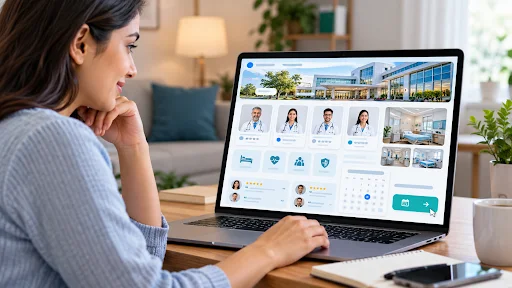
Before booking an appointment, patients usually go through several evaluation steps. They compare doctors, explore treatment options, check reviews and assess whether the hospital feels suitable for their needs.
A strong hospital website design supports this decision process by providing complete and accurate information at the right time. It helps patients trust the healthcare brand and move from awareness to action by answering common concerns and making appointment steps simple.
The website plays an important role in patient decision-making online because it combines information, credibility and convenience in one place. When visitors find clear details about treatments, doctors and facilities, they are more likely to contact the hospital.
Does a Strong Website Matter More Than Reviews or Social Media?
A hospital’s website, reviews and social media presence serve different purposes. They do not replace each other.
A hospital’s online reputation is often shaped by patient reviews, ratings and public conversations. These reviews help people understand the experiences of previous patients. Social media can increase awareness and showcase hospital activities, achievements and patient education.
However, the website is where many visitors verify information and make the final decision. Reviews may bring a patient’s attention to a hospital, but the website often helps convert that interest into an appointment.
A complete digital strategy combines reputation building, useful content and a trustworthy website experience.
What Should Be on Every Page of a Hospital’s Website?
Every hospital’s website page should guide visitors towards the next step. Important elements include clear service information, doctor details, appointment options, patient FAQs and easy navigation.
Effective healthcare content marketing helps hospitals answer common patient questions while improving online visibility. Content should focus on patient concerns, explain treatments clearly and provide useful guidance.
Each page should also support the overall patient journey healthcare marketing approach by helping visitors move from learning about a condition to choosing the right healthcare service.
Your Website is Your Healthcare Brand’s First Impression
A hospital website is often the first interaction patients have with a healthcare brand. A clear, trustworthy and patient-focused website can create confidence before a patient walks through the hospital doors.
At MfunL, we help healthcare brands build stronger digital experiences through strategies designed for patient growth. As a digital marketing agency in Kolkata for hospitals, we create result-focused solutions that improve online visibility, build trust and help hospitals connect with more patients.
Contact us today to discuss your hospital’s digital growth journey.
People Also Ask
1. How much does a slow-loading website actually affect patient bookings?
A slow website can increase visitor drop-offs because patients may leave before finding important information or contacting the hospital. Faster loading improves user experience and engagement.
2. Do hospitals need a separate page for every department, or is one general page enough?
Separate department pages help patients find specific information easily. They also allow hospitals to explain treatments, doctors and facilities in detail.
3. How important are online reviews compared to the website itself?
Reviews build initial trust, but the website helps patients verify information and understand services before making a final decision.
4. Should a hospital's website include pricing information for treatments?
Providing general cost guidance can improve transparency. However, treatment pricing may vary depending on patient needs and should include proper explanations.
5. How often should a hospital update its website content to stay relevant?
Hospitals should regularly update doctor profiles, service details, health content and facility information to keep the website accurate and useful.