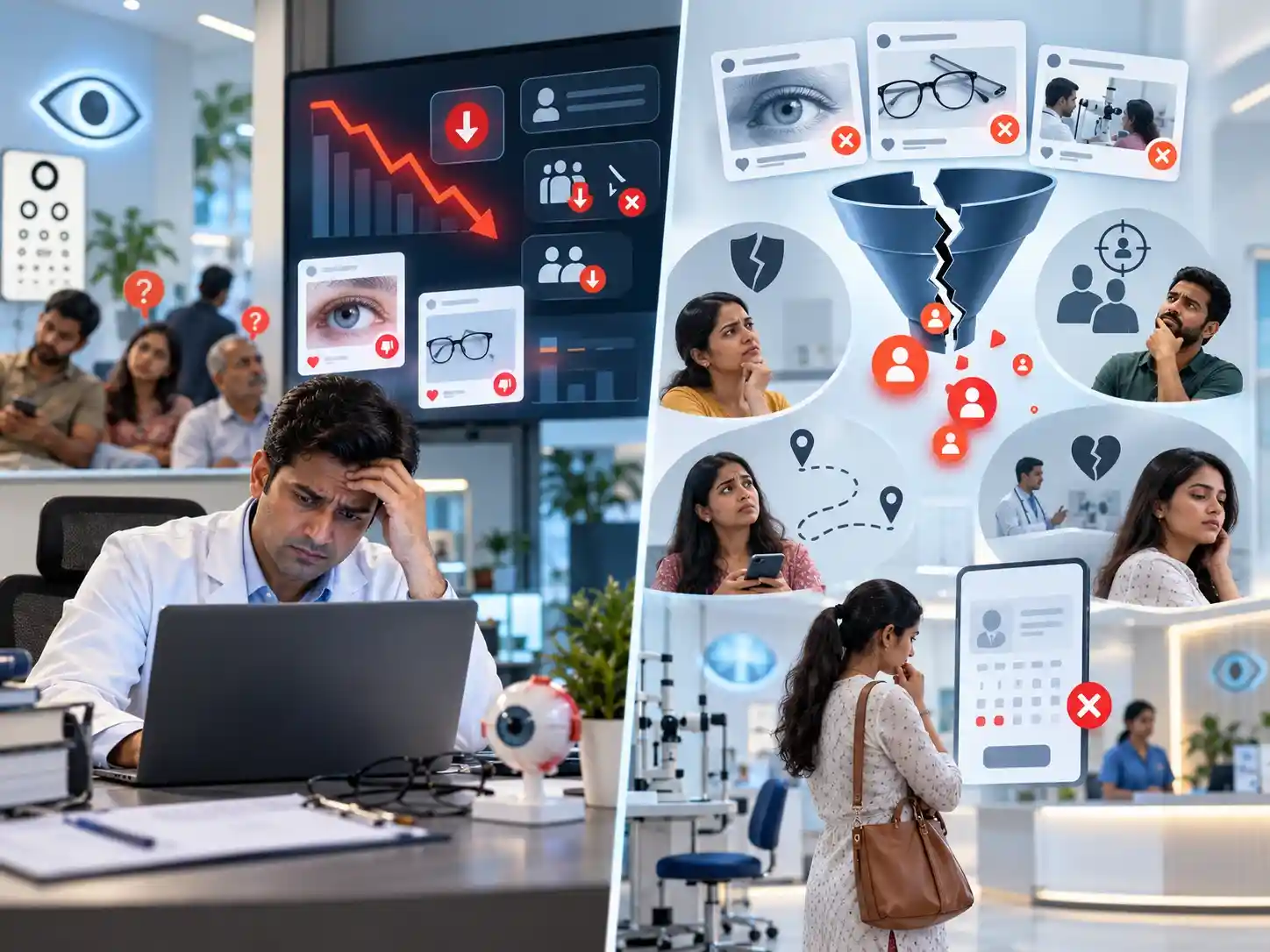
Running ads is easy. Turning clicks into consultations is where many eye hospitals struggle. Effective ad conversion management for hospitals depends on more than launching campaigns and waiting for enquiries. Even well-funded Google Ads for hospitals can underperform when targeting, landing pages, follow-up, or messaging fail to match what patients need. A campaign may look busy on the dashboard yet produce few patient bookings.
People searching for cataract surgery, LASIK, glaucoma care, retina treatment, or emergency eye care often compare providers before deciding. If your advertising journey does not guide them from search to trust to action, valuable leads disappear. The real problem is often not traffic. It is what happens after the click.
Why Clicks Don’t Always Mean Bookings for Eye Hospitals
A click only shows that someone found your ad relevant enough to visit. It does not mean they are ready to schedule immediately. The ad conversion rate in healthcare depends on how easily a potential patient can understand your service, trust your hospital, and take the next step.
Low patient bookings may happen because the page loads slowly, appointment details are unclear, the contact form is too long, or visitors cannot quickly find information about doctors, technology, costs, or location. Sometimes the ad attracts the wrong audience.
Common Reasons Eye Hospital Ads Fail to Convert
Several weak points can sit behind poor results. Hospital search ads may generate traffic, but campaigns can fail when:
- Targeting is too broad and reaches people outside your service area.
- Ads use generic claims instead of addressing specific eye care needs.
- Landing pages contain too much information and no strong appointment action.
- Creatives fail to communicate treatment benefits, expertise, or trust.
- Enquiries are not contacted quickly.
- Calls, forms, and WhatsApp leads are not tracked properly.
How to Fix Targeting Issues in Your Ad Campaigns
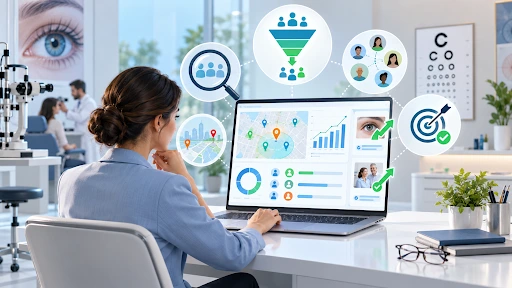
Better ad conversion management starts with reaching people most likely to need your services. Instead of showing every ad to a large audience, segment campaigns by treatment, location, urgency, and search behaviour.
Healthcare Google Ads targeting should distinguish between someone researching an eye condition and someone actively looking for a consultation. High-intent searches deserve more attention because they are closer to taking action.
Use Hyperlocal and Intent-Based Keywords
An eye hospital usually serves patients within a realistic travelling radius. Hyperlocal targeting can focus campaigns on nearby neighbourhoods, districts, or cities while excluding areas that rarely produce appointments.
Effective healthcare PPC targeting also uses intent-based terms. Queries related to cataract surgery, retina specialists, LASIK consultation, or emergency eye care usually indicate stronger intent than broad searches such as eye problem or vision care.
Match Ad Copy to Patient Search Intent
Your ad should answer the reason behind the search. Someone looking for cataract surgery needs different information from someone searching for dry eye treatment.
Use service-specific headlines, clear benefits, doctor expertise, location cues, and a simple appointment action. Avoid vague claims unless the page provides evidence to support them. Relevance improves trust and campaign quality.
Avoid Wasting Budget on Broad Match Terms
Broad match keywords can expose campaigns to searches that seem related but have little commercial intent. This can drain budget quickly.
Use phrase match, exact match, negative keywords, search-term reviews, and location exclusions to reduce irrelevant clicks. Search campaigns perform better when spending focuses on queries with a realistic chance of becoming consultations.
Why Your Landing Page May Be Losing Patients
A strong ad cannot rescue a weak landing page. Landing page optimization for hospitals should focus on clarity, speed, trust, and simplicity.
The page should immediately show the relevant eye care service, doctor credentials, location, appointment options, and a clear call to action. Avoid overwhelming visitors with large text blocks or competing buttons.
Patient conversion management also requires removing friction. Keep enquiry forms short. Make phone and WhatsApp options visible. Add authentic reviews where appropriate and explain what happens after someone submits an enquiry.
The Role of Follow-Up Systems in Converting Ad Leads
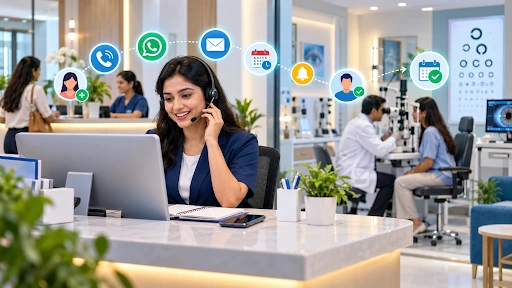
Many hospitals lose leads after paying to acquire them. A person may submit a form but receive a call hours later, or no follow-up at all.
A structured patient follow-up system helps teams respond quickly, record contact attempts, send reminders, and track whether an enquiry becomes a consultation. This is essential for patient lead generation because speed and consistency can influence whether someone chooses your hospital or another provider.
Train reception or call-centre teams to understand the advertised service. They should answer common questions, explain appointment availability, and know when to escalate clinical concerns. Marketing cannot fix a broken response process alone.
Tracking the Right Metrics for Real ROI
Clicks, impressions, and reach are useful, but they do not tell the whole story. Hospital marketing ROI should be measured against qualified leads, booked consultations, cost per appointment, call quality, and treatment enquiries.
Track conversion performance across campaigns, services, devices, and locations. Compare which channels produce genuine enquiries rather than only cheap clicks.
How Retargeting Recovers Lost Patient Leads
Not every visitor books during the first website visit. Some compare hospitals, discuss treatment with family, check doctor profiles, or wait before deciding.
Retargeting gives your hospital another chance to stay visible. Meta ads for hospitals can remind previous visitors about consultations, specific services, doctor availability, or useful educational content.
Used carefully, retargeting supports lead recovery by bringing interested users back after they leave. Keep frequency controlled, avoid sensitive messaging, and send people to relevant pages rather than repeating generic advertisements.
Turning Ad Spend into Patient Growth
When eye hospital ads fail, the problem is rarely the platform alone. Conversion depends on targeting, message relevance, landing-page experience, follow-up speed, tracking, and retargeting working as one connected system.
A connected conversion strategy helps every rupee work harder while creating a smoother journey for patients.
If your eye hospital needs a clearer strategy for campaigns, conversion, and measurable growth, reach out to our digital marketing agency in Kolkata.
People Also Ask
1. Why is your hospital's Google Ads campaign getting clicks but no patient bookings?
Clicks can come from irrelevant searches, weak targeting, confusing landing pages, or slow follow-up. Review search terms, page experience, call handling, and appointment tracking together.
2. How much should a hospital budget for digital ads to see real conversions?
There is no universal amount. Budget depends on location, competition, treatments promoted, search volume, expected cost per lead, and your hospital's capacity to handle enquiries efficiently.
3. What's the difference between ad clicks and actual patient conversions?
An ad click means someone visited your page. A patient conversion means they completed a meaningful action, such as calling, submitting an enquiry, booking a consultation, or starting an appointment process.
4. How long does it take to fix a low-converting hospital ad campaign?
Some issues can improve within days, such as keyword exclusions or landing-page changes. Reliable optimisation usually needs enough conversion data to identify patterns and test improvements.
5. Can retargeting ads really bring back patients who didn't book the first time?
Yes. Retargeting can remind previous visitors about relevant services and encourage them to return. It works best when ads are useful, privacy-conscious, and linked to a clear next step.