A patient today rarely walks into a hospital on instinct. Before they book anything, they've already searched your name, scrolled through your reviews, checked your website on their phone, and quietly compared you to two or three other options nearby.
If your hospital's daily patient count feels inconsistent, or if people who once chose you are now choosing someone else, the reason is rarely your doctors or your equipment. More often, it's simply that your hospital isn't showing up where these decisions are actually being made — online.
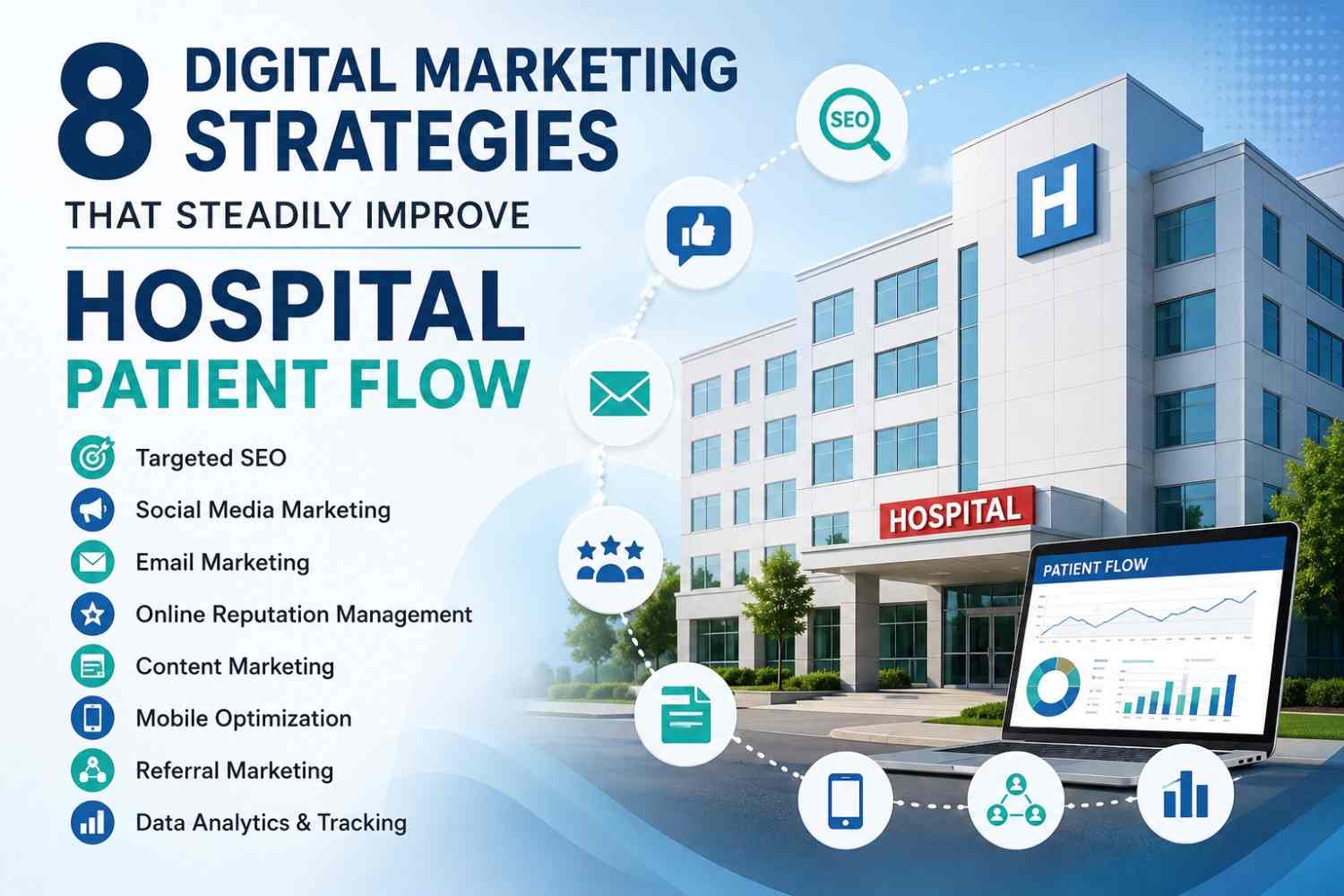
MfunL, a healthcare digital marketing company in Kolkata, helps hospitals, nursing homes, and clinics turn that inconsistent footfall into a steady, predictable flow of patients. Below are eight strategies we've seen consistently deliver results.
Why Offline Reputation Alone No Longer Fills Your OPD
A hospital can have decades of trust built through good care and still lose patients it never even knew were looking elsewhere. Referrals and word-of-mouth still matter, but they no longer travel on their own. The moment someone searches "best hospital near me" or "emergency care in Kolkata," your reputation needs to already be visible — or a competitor's will be instead.
Hospitals that treat their digital presence with the same seriousness as patient care tend to see steadier admissions, stronger trust, and fewer patients who simply disappear after one enquiry call. Here's where that work actually begins.
1. Get Your Google Business Profile Right
For most patients, your Google listing is the first real interaction they have with your hospital — long before they speak to your staff.
A profile that's incomplete, outdated, or inconsistent quietly removes you from the exact searches that matter.
Start here:
- Confirm your name, address, contact number, and hours are accurate everywhere they appear
- Upload genuine photos of your hospital, OPD, and doctors — not stock imagery
- Write your description around real patient searches, such as emergency services or a speciality you're known for
2. Run Ads Built Around Real Patient Intent
Paid campaigns remain the fastest route to visibility, particularly for time-sensitive needs like surgeries, diagnostic packages, or maternity care.
Where most hospitals go wrong is running broad, untargeted ads that spend budget without producing bookings. Search advertising performs far better when it's built around specific intent — someone actively searching for a maternity hospital, not a generic "hospital in Kolkata" query.
Combine that with well-targeted campaigns on Facebook and Instagram promoting seasonal health packages or specialty camps, and paid visibility can convert into filled appointment slots within days.
3. Build Long-Term Visibility Through Organic Search
Ads bring speed, but organic search is what keeps bringing patients to your website without ongoing spend.
When your hospital ranks for the searches patients are actually running, you stop chasing attention and start being found at the exact moment someone is ready to book.
Focus areas:
- Dedicated pages for each major service or treatment you offer
- Separate pages for each branch if you operate across multiple locations
- Blog content that consistently answers real patient questions, rather than a rushed batch published once a year
4. Use Video to Build Trust Before the First Visit
A short video does more to calm a nervous patient than any brochure ever could.
Introducing your specialists on camera, walking through your facilities, or letting a genuinely recovered patient share their experience helps turn hesitant browsers into confirmed bookings — because trust is easier to feel than to read.
5. Show Up Consistently on Social Media
Patients are already deciding who to trust while scrolling — your hospital being visible there isn't optional anymore.
Hospitals that stay active on Facebook, Instagram, and LinkedIn, sharing health awareness content, doctor updates, and genuine patient moments, build a level of familiarity that traditional advertising simply can't replicate. It also strengthens everything you're doing around reputation.
6. Take Reputation Management Seriously
A handful of unanswered negative reviews, or the absence of reviews altogether, is often enough to make a hesitant patient choose someone else.
Managing this well means actively encouraging genuine reviews from satisfied patients, responding to all feedback professionally, and addressing concerns before they turn into public complaints. Reputation online now carries the same weight word-of-mouth once did — just at a much larger scale.
7. Create Content That’s Local and Specialty-Specific
Generic health content rarely ranks and almost never convinces anyone.
Whether you run a general hospital, a multispecialty setup, or a focused eye, cancer, or daycare facility, content built around your city and your specialty performs far better — seasonal health advisories, local camp updates, and real patient stories rooted in your community. This is where genuinely local, well-researched medical content creation makes the difference that copy-pasted health blogs never will.
8. Track Everything, and Keep Refining
Digital marketing that isn't measured tends to quietly repeat the same mistakes month after month.
Real conversion tracking follows the entire patient journey — the ad click, the call to your front desk, the actual OPD visit — and adjusts based on what that data shows. None of this works, though, if the website behind it is slow or confusing. A properly built, fast, easy-to-navigate hospital website is what actually turns that traffic into confirmed appointments.
Why Hospitals Work With MfunL
Healthcare marketing carries a different weight than marketing any other business — it demands accuracy, sensitivity, and trust. As a healthcare-focused marketing partner based in Kolkata, MfunL builds strategies around your hospital's specialty, scale, and location, whether you run a general hospital, a nursing home, or a superspecialty centre. Every strategy stays ethical and compliant, built for lasting visibility rather than short-lived spikes.
Why Delaying Costs More Than Acting Now
Every month your hospital's digital presence remains incomplete is a month a competitor — likely one already investing in exactly these strategies — moves further ahead in local search. Ground lost this way is almost always more expensive to win back later.
Ready to Steady Your Patient Flow?
If patients aren't finding your hospital online today, they're finding someone else's instead. Reach out to MfunL to build a strategy shaped around your hospital's specialty and location.
Frequently Asked Questions
1. How soon can a hospital expect results from organic search efforts?
Most hospitals see measurable improvement in visibility within 3–4 months, with results compounding meaningfully after 6 months of consistent work.
2. Should a hospital choose paid ads or organic search?
They solve different problems. Ads deliver quick bookings for time-sensitive services, while organic search builds visibility that keeps working without daily spend. Most hospitals benefit from running both together.
3. Do Google reviews really affect a hospital's patient numbers?
Yes, significantly. Reviews often shape a patient's decision before they even open your website, which is why active reputation management is one of the highest-return strategies available.
4. Does this apply to specialty clinics as well as hospitals?
Yes. The same principles extend to multispecialty clinics, dental and aesthetic practices, fertility centres, and individual practitioners, adjusted to match their specific specialty and how patients search for that care.
5. What sets a healthcare-focused marketing agency apart from a general one?
Healthcare marketing has to work within compliance and patient sensitivity in ways general marketing doesn't need to consider. An agency focused on this space understands how patients genuinely search for and choose care.