
A child falls from the bed at 11 PM. The parents search for possible brain injury symptoms, nearby hospitals and specialists who can help. Within seconds, Google presents several options. But will your neurosurgical practice appear among them?
This is where SEO becomes important. Families seeking head injury care are rarely browsing casually. They want reliable medical information, accessible specialists and clear directions for obtaining appropriate care.
A well-planned digital strategy can connect your practice with patients who need specialist assessment and follow-up care.
What Families Actually Search After a Head Injury
Families rarely begin by searching for a doctor's qualifications. They usually start with symptoms, possible complications or immediate concerns.
Their searches typically fall into three categories.
1. Symptom-based searches
Parents might search for concussion symptoms after noticing their child’s headaches, dizziness, confusion or vomiting following a fall. These searches indicate an immediate need for understandable medical information rather than a direct intention to book an appointment.
2. Urgent medical searches
Queries such as “when to see a neurosurgeon after a head injury” or “emergency head trauma specialist” suggest concern about the severity of an injury. Content addressing these questions should prioritise emergency assessment and explain when neurosurgical involvement may be necessary.
3. Location-based searches
Families may search for brain injury hospitals or neurological specialists near their current location. These searches carry strong geographical intent, making accurate clinic locations, hospital information and contact details essential. Understanding these differences helps neurosurgeons develop content that matches each stage of the family's healthcare journey.
Why Neurosurgeon SEO Matters for Head Injury Care
Neurosurgical consultations often begin through emergency department referrals, physician recommendations or hospital networks. However, families may also search independently after discharge. For example, a patient recovering from a brain injury might require monitoring, imaging reviews or a specialist follow-up appointment.
A website that clearly explains traumatic brain injury treatment can help families understand the neurosurgeon's scope of practice and available consultation services.
Effective online optimisation supports three important goals.
1. Visibility: Helping relevant patients discover your practice through search engines.
2. Credibility: Demonstrating qualifications, experience and hospital affiliations.
3. Continuity: Making it easier for patients to identify appropriate post-hospital follow-up services.
The objective is not to replace medical referrals but to complement established patient pathways through reliable digital information.
Optimise Your Google Business Profile to Rank for “Neurosurgeon Near Me”
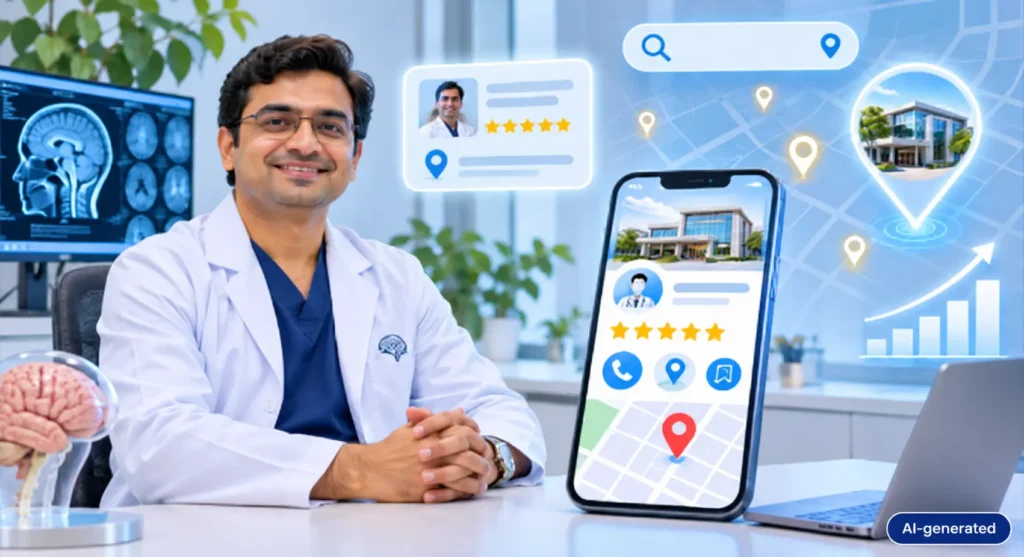
A family searching ‘‘neurosurgeon near me’’ may encounter Google's local results before visiting individual websites. An optimised Google Business Profile for doctors can display consultation locations, contact numbers, working hours, photographs and directions. However, profile completeness alone does not guarantee rankings. Google considers relevance, distance and prominence when displaying local results.
Categories, Services and Hospital Affiliations
Choose the most accurate available primary category and describe only services genuinely offered. Include information about neurosurgical consultations, brain injury evaluation and verified hospital affiliations. Distinguish clearly between outpatient consultation hours and hospital emergency services.
Reviews and Q&A Handling
Patient feedback can influence how families choose doctors. Encourage genuine, voluntary reviews without offering incentives. Respond professionally without confirming patient relationships or revealing confidential details.
Use publicly available questions to explain appointments, accessibility and consultation procedures without providing individual medical diagnoses.
Accurate NAP (Name, Address, Phone) Details
Ensure your name, clinic address and telephone number remain consistent across Google, hospital listings and your website. Incorrect contact information can create unnecessary difficulties for families seeking timely assistance.
Build Service Pages Around Conditions, Not Just Credentials
An impressive medical biography establishes professional background. However, condition-specific pages help patients understand the services a neurosurgeon provides.
One Page per Condition and Procedure
Develop individual pages for clinically relevant services and conditions, including:
- Subdural hematoma: Explain bleeding between the brain's outer covering and its surface, along with possible management approaches.
- Skull fracture treatment: Discuss diagnostic assessment, associated injuries and circumstances requiring surgical intervention.
- Pediatric head injury specialist: Describe relevant experience and the evaluation of brain injuries in children, where applicable.
- Brain haemorrhage: Explain management and postoperative neurological monitoring.
Each page should reflect services actually available through the surgeon's practice.
Plain-Language Explanations with Symptoms, Diagnosis and Treatment Paths
Avoid presenting complex surgical terminology without explanation. Structure pages around questions patients commonly ask:
- What symptoms might indicate the condition?
- How do doctors establish a diagnosis?
- When might hospital observation or surgery be considered?
- What follow-up care may be required?
Mention appropriate investigations, such as CT scans, without suggesting that every patient requires imaging or surgery. This approach improves readability while making the website more useful for families.
Local SEO for Neurosurgeons: Signals That Matter

Strong local SEO for neurosurgeons helps search engines associate a practice with its actual service locations. For a Kolkata-based surgeon, relevant visibility may extend to neighbourhoods such as Salt Lake, New Town, Mukundapur and other areas where consultations are genuinely available.
Important optimisation activities include:
- Local citations: Maintain consistent details across trustworthy medical directories
- Location pages: Create useful pages for verified consultation addresses
- Hospital partnerships: Seek accurate links from affiliated hospital websites
- Local backlinks: Earn relevant mentions through legitimate medical associations, educational activities and community initiatives
Avoid creating numerous nearly identical location pages for areas where the surgeon does not practise. Local visibility should reflect genuine accessibility rather than artificial geographical coverage.
Create Content That Answers Urgent Family Questions
Articles about childhood falls, suspected concussions and post-injury recovery can address common concerns while explaining appropriate medical pathways.
Useful topics include:
- Warning signs following a fall or collision
- Differences between emergency assessment and scheduled specialist consultations
- Recovery monitoring after hospital discharge
- Questions families should ask during follow-up appointments
Safety information must remain prominent. Repeated vomiting, seizures, worsening headaches, increasing confusion, weakness or difficulty waking someone after a head injury require immediate emergency medical assessment.
Consider adding FAQ structured data to relevant pages where appropriate. It helps describe question-and-answer content to search engines, although it does not guarantee enhanced search-result displays.
Build Trust with E-E-A-T Signals
Healthcare websites deal with information that may directly influence medical decisions. Google's Experience, Expertise, Authoritativeness and Trustworthiness principles provide a useful framework for evaluating content credibility.
Neurosurgical websites should establish credibility through:
- Physician biographies: Display authentic qualifications, experience and areas of clinical practice.
- Professional credentials: Mention verified registrations, certifications and affiliations accurately.
- Medical reviews: Identify qualified reviewers and display meaningful content review dates.
- Patient experiences: Publish stories only with valid consent and appropriate privacy safeguards.
- Ethical communication: Avoid exaggerated recovery promises, misleading superiority claims and sensational surgical imagery.
All promotional activities should comply with applicable Indian medical advertising and professional conduct requirements. Trustworthy content should help patients make informed decisions without creating unnecessary fear.
Measure What Works
Website traffic alone cannot establish whether a digital strategy is generating meaningful patient enquiries. Track performance through indicators connected to actual appointment activity.
| Performance Indicator | What It Reveals |
| Website calls | Interest in contacting the practice |
| Appointment requests | Potential consultation enquiries |
| Google Business Profile interactions | Calls, website visits and direction requests |
| Organic search impressions | Visibility across relevant search queries |
| Local keyword rankings | Performance in target service areas |
| Service-page engagement | Interest in specific medical conditions |
Use Google Search Console and website analytics alongside appointment records, where appropriate. Review results regularly to identify pages generating qualified enquiries and subjects requiring clearer information.
Key Takeaway
Families searching for care after a head injury need dependable answers, accurate contact information and access to appropriate medical services.
An effective strategy brings together condition-focused pages, local search optimisation, trustworthy credentials, medically reviewed information and measurable performance.
Contact MfunL, our digital marketing agency in Kolkata for neurosurgeons, to strengthen your online visibility, build patient trust and generate relevant consultation enquiries.
Frequently Asked Questions
1. How Long Does SEO Take to Show Results for Neurosurgeons?
Initial improvements may appear within a few weeks, but meaningful organic growth commonly takes several months. Competition, website condition, content quality and local visibility influence progress. Rankings and patient enquiries cannot be guaranteed.
2. What Keywords Should a Neurosurgeon Target for Head Injury Care?
Prioritise condition-specific, symptom-related, procedure-based and location-focused searches. Keyword selection should match the surgeon's clinical services, consultation locations and patient needs rather than relying exclusively on high search volumes.
3. Does a Google Business Profile Really Help a Neurosurgeon Get Patients?
It can improve local discoverability and make contacting a practice easier. Accurate details, relevant categories and genuine feedback help families evaluate available options. However, visibility does not guarantee appointments.
4. What Website Features Help Families Contact a Neurosurgeon During an Emergency?
A neurosurgeon's website should clearly display verified consultation addresses, contact numbers, hospital affiliations, and appointment information. Mobile-friendly navigation and easily accessible directions can help families find appropriate services. Importantly, websites should distinguish routine neurosurgical appointments from emergency services and advise patients with serious head injury symptoms to seek immediate emergency medical care.
5. Can Neurosurgeons Use Patient Reviews and Stories in Marketing?
Patient experiences require careful ethical and privacy consideration. Obtain valid consent before sharing identifiable information, comply with professional advertising rules and avoid misleading claims. Never disclose confidential clinical details in public review responses.